

Cartier’s Ballon Bleu is one of the most recognizable luxury watches in the world, which also makes it one of the most frequently copied. Whether you are purchasing from a reseller, evaluating a pre-owned piece, or simply curious about your own watch, knowing how to distinguish a genuine Cartier from a replica is essential. Below is a detailed, practical guide based on measurable features—not guesswork—so you can make an informed decision.
1. Examining the Dial Logo
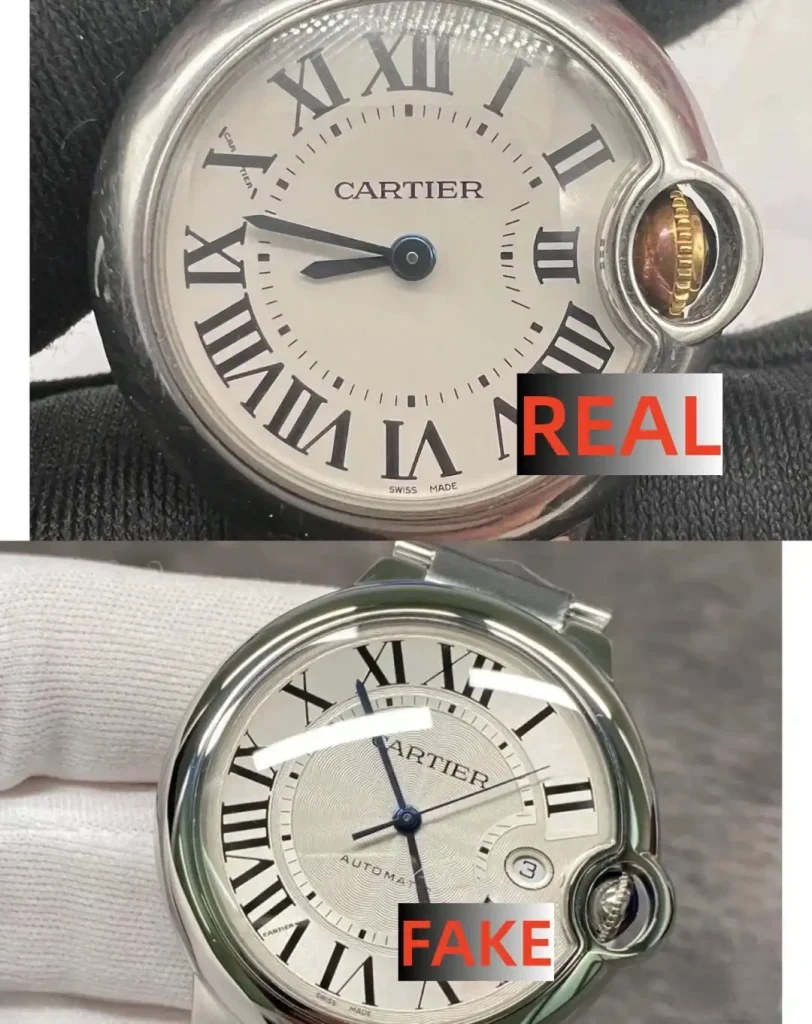
One of the clearest indicators lies directly on the dial. On an authentic Ballon Bleu, the “CARTIER” logo is printed with dense, even pigment. Under magnification, the letters appear clean, smooth, and slightly raised due to the high-quality printing process.
Cartier also hides a micro-“CARTIER” signature inside the Roman numeral at the 7 o’clock position on every Ballon Bleu. This text is incredibly small and requires a jeweler’s loupe or microscope to be visible. A genuine mark looks crisp and fully formed, while replicas often show blurry edges or incomplete lettering.
At the 6 o’clock position, an authentic dial will include a well-defined “SWISS MADE” inscription. Again, the difference is in clarity: real engravings remain sharp even under magnification.
2. Authentic Sapphire Cabochon Crown
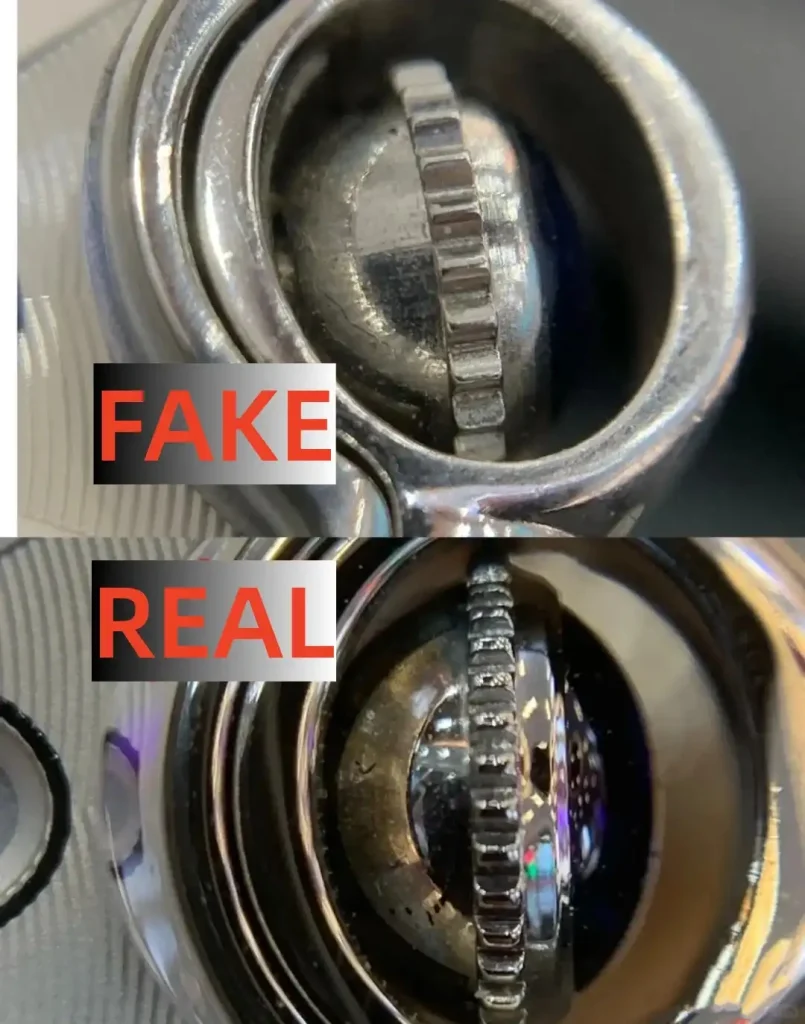
The crown of the Ballon Bleu is another signature detail—its blue sapphire cabochon is instantly recognizable. On a genuine watch, the metal crown’s ridges are evenly spaced, symmetrical, and smoothly machined. Each groove is consistent in depth and pattern.
On lower-quality replicas, these ridges often look uneven or rough, because they’re stamped rather than precisely cut. The sapphire imitation may also lack the rich luster or depth of color found in Cartier’s polished cabochon.
3. The Blue Steel Hands
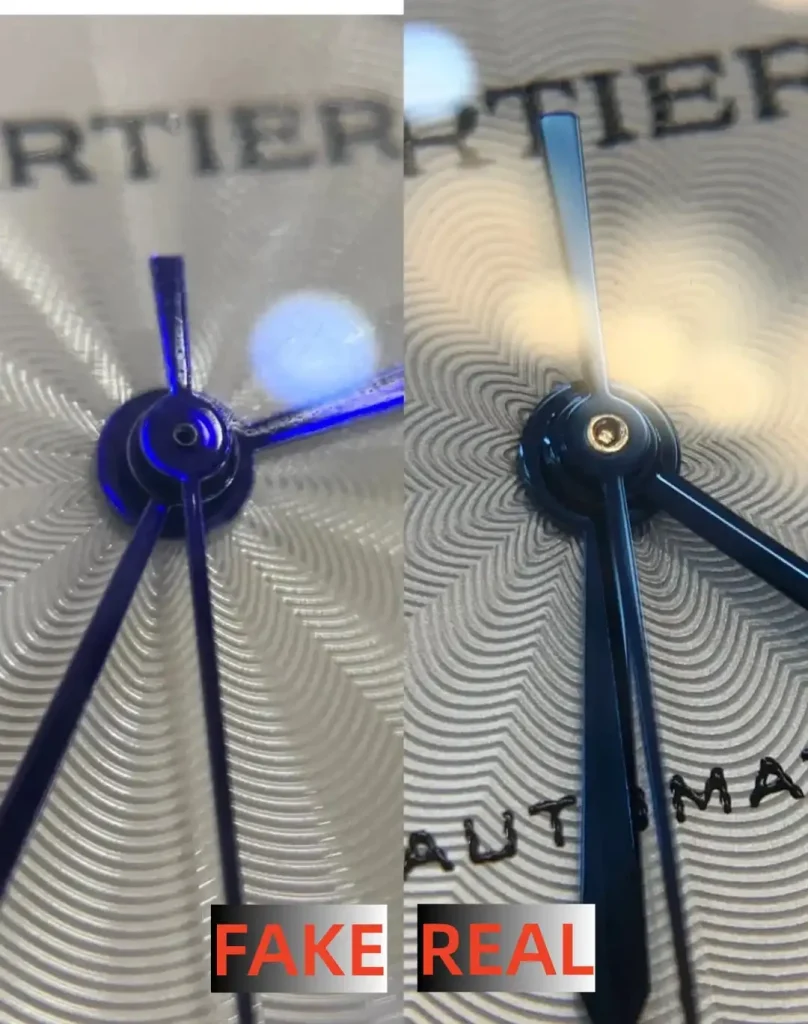
Cartier uses heat-treated blue steel hands, which are not only a design element but also a hallmark of quality craftsmanship. Genuine hands appear bright, consistent in color, and perfectly smooth due to the electroplating process.
Replicas typically fall short here. The hands may look dull, unevenly colored, or slightly shorter than the authentic ones. The tips may appear thicker or less refined—a small detail, but noticeable when compared side-by-side.
4. Guilloché Dial Texture
The Ballon Bleu’s dial features intricate guilloché waves that radiate from the center. On genuine Cartier watches, these engraved patterns transition smoothly, with refined depth and a natural gradient.
Replicas tend to miss the finesse. The texture may look too deep, overly sharp, or artificially contrasted. Instead of a natural wave pattern, the grooves can appear forced or inconsistent, which breaks the elegance of the original design.
5. Caseback Engravings
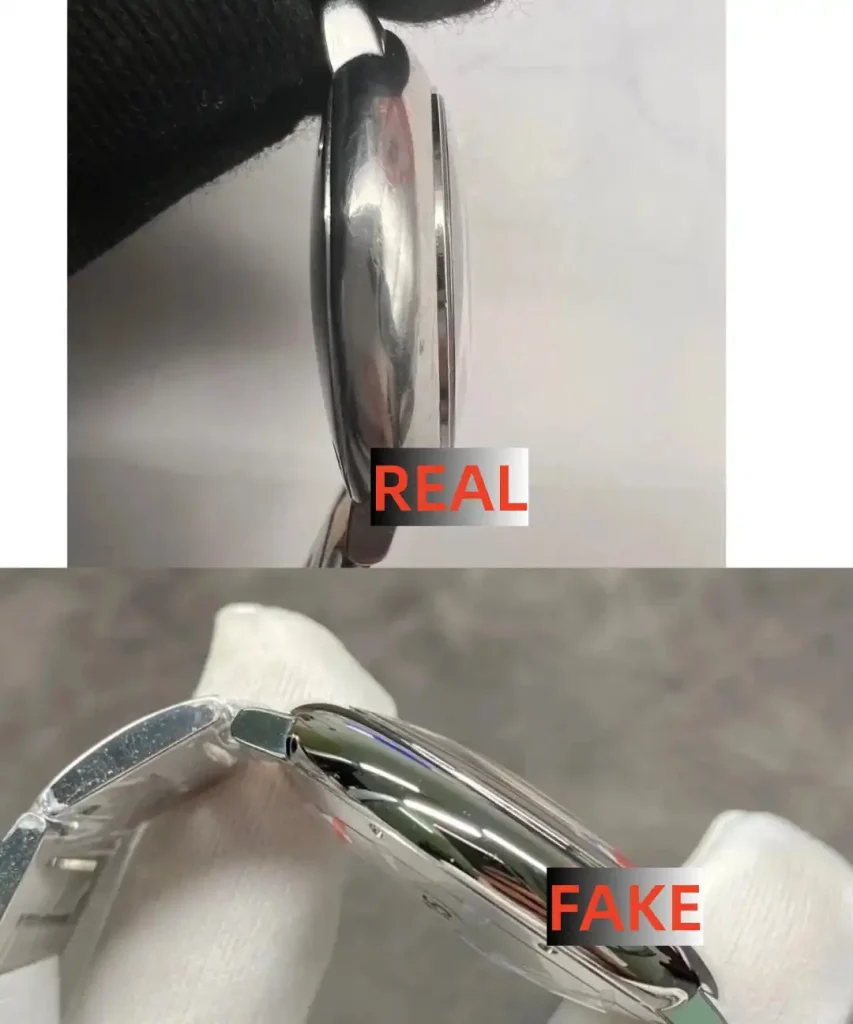
Turning the watch over provides another useful authenticity check. A real Cartier caseback has lettering that is clean, evenly carved, and consistent in depth. The edges of each letter look natural—never overly bold or overly dark.
Many replicas use cheaper engraving methods that produce deeper, heavier markings. Smaller text may look smudged or rough, and the spacing between letters is often irregular.
Final Thoughts
Authenticating a Cartier watch requires more than a quick glance. True craftsmanship reveals itself through consistent precision—something that cannot be fully replicated with low-cost manufacturing. If you’re considering a purchase, always take the time to check these physical cues, and whenever possible, request detailed photos or have the watch inspected by a professional.
By learning what to look for, you’ll not only protect your investment but also gain a deeper appreciation for the engineering and artistry behind every genuine Cartier Ballon Bleu.
If you’re shopping for one, use this guide as your reference point—and you’ll be far better equipped to make a confident and informed decision.